Find Waterproof White Paper Wall Calendar for Office, Home, and Gifts
Explore 30 waterproof white paper wall calendar options to compare sizes, binding styles, and customization features. This selection supports diverse needs for office decoration, home use, and promotional gifting; compare the available evidence and request quotations based on your requirements.
Key considerations
Products List



Comprehensive Sourcing Guide
Waterproof White Paper Wall Calendar Sourcing Guide
The term "waterproof white paper wall calendar" often implies a specific material resilience that requires careful verification against actual product listings. While the supplied data confirms the availability of paper-based wall calendars with custom designs and lamination finishes, the specific claim of "waterproof" capability is not explicitly listed as a standard attribute for the observed models. Buyers must distinguish between standard paper products treated with glossy or matte lamination and those engineered with true water-resistant coatings or synthetic substrates. The observed listings highlight "Matt/Glossy Lamination" and "Film Lamination" as surface treatments, which offer some moisture resistance but may not equate to full waterproofing under heavy exposure.
Procurement decisions should focus on verifying the specific surface treatment claims rather than assuming inherent waterproof properties from the product name alone. The observed data indicates that suppliers offer "Customized Gloss/Matte Lamination" and "Film Lamination," which are critical processes for enhancing durability. However, without explicit test results or certification data confirming water resistance ratings, buyers should request physical samples to test the material's reaction to humidity and direct contact with liquids. This verification step ensures that the selected calendar meets the environmental demands of its intended display location, whether in a humid office or a promotional event space.
Product Scope and Observed Listing Signals
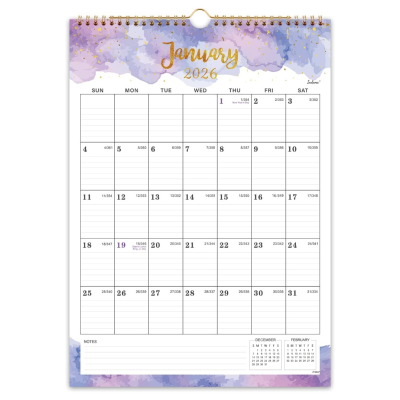
The current market signals for wall calendars reveal a diverse range of models, including specific product codes like H-005, Q1, and H-007, which cater to different aesthetic and functional needs. The observed listings confirm that these items are primarily categorized as "Wall Calendar" or "Desk Calendar" types, with the wall variants often featuring dimensions such as 318*767mm or adhering to A3 standards. The product scope extends to "Daily Tear off Calendar Printing" and "Custom Wall/Desk Calendar" options, indicating that suppliers are prepared to handle both standard yearly/monthly formats and highly customized promotional designs. This variety allows buyers to select products that align with specific branding requirements or space constraints.
Listing signals also highlight the availability of customization in design, color, and binding methods, which is essential for corporate gifting and promotional campaigns. The data shows that "Customization" is available, with options for "Customized Designs Acceptable" and "Color: Customize," allowing for tailored branding on the white paper substrate. Furthermore, the observed "Promotional: Yes" attribute suggests these items are frequently marketed for marketing campaigns, where the visual impact of a clean white background combined with custom graphics is a key selling point. Buyers should leverage these signals to identify suppliers capable of delivering the specific visual identity required for their campaigns.
Technical Specifications to Verify
When evaluating technical specifications, the binding method is a critical factor that influences the longevity and usability of the wall calendar. The observed data presents a mix of binding types, including "Spiral" binding for desk calendars and "Sewing Binding" or "Wire Binding" for other formats. For a wall calendar intended for daily tearing or long-term hanging, the structural integrity of the binding must be verified to ensure pages do not detach prematurely. Buyers should specifically confirm whether the "Sewing Binding" or "Wire Binding" observed in the listings is suitable for the weight of the paper and the frequency of use expected in the target environment.
Surface finish and material composition are equally vital for ensuring the calendar withstands environmental stressors. The listings confirm the use of "Coated Paper" with "Film Lamination" or "Matt/Glossy Lamination," which provides a protective layer against minor spills and handling wear. However, the specific paper weight and the thickness of the lamination film are not detailed in the provided facts, necessitating a request for technical data sheets. Verifying the exact paper type and the quality of the lamination process will determine if the product can truly resist moisture and maintain its visual clarity over time, especially in high-traffic areas where physical contact is frequent.
Compliance and Safety Documentation
Compliance and safety documentation for paper-based wall calendars generally focus on the safety of inks and adhesives used in the printing and assembly processes. While the supplied facts do not list specific certifications like FSC or REACH, buyers should assume that any supplier exporting from China or Guangdong must adhere to international safety standards for consumer goods. It is essential to request documentation confirming that the inks used for the "Customized Designs" are non-toxic and compliant with regulations in the destination market, particularly if the calendars are intended for use in schools or children's environments.
Packaging and material safety are also areas where documentation is required to ensure the product meets import regulations. The observed packing methods include "OPP Bag," "1piece/Poly and Colorful Box," and "Carton Box," each of which may have different environmental compliance requirements. Buyers should verify that the polybags and boxes used for "1piece/ Polybag and Colorful Box" packing are free from harmful substances and meet local recycling or disposal standards. Additionally, confirming that the "Custom" packaging options do not introduce hazardous materials is a necessary step to avoid regulatory hurdles during customs clearance.
Cost Drivers and Commercial Terms
Cost drivers for wall calendars are significantly influenced by the level of customization and the complexity of the surface treatment processes. The observed data indicates that "Customized Designs Acceptable" and "Color: Customize" are standard offerings, which typically increase production costs compared to pre-printed stock items. The choice between "Matt/Glossy Lamination" and "Film Lamination" also impacts the final price, as more durable or specialized finishes require additional processing steps and higher-quality materials. Buyers should anticipate that the "Custom" standard options will carry a premium over the fixed "A3" or "318*767mm" standard sizes.
Commercial terms such as MOQ and lead time are critical variables that affect the overall procurement strategy. The observed MOQ range spans from 10 to 2000 units, offering flexibility for both small promotional runs and large-scale distribution. The "Delievery Time" is noted as 15 days, which serves as a baseline for planning but may vary based on the complexity of the custom design and the current production load. Buyers must negotiate these terms carefully, ensuring that the 15-day lead time is realistic for their specific order volume and that the MOQ aligns with their inventory management capabilities to avoid overstocking or stockouts.
Supplier Qualification and Quality Control
Supplier qualification should prioritize manufacturers with a proven track record in producing paper-based calendars with consistent quality control measures. The observed data lists origins in "Guangzhou" and "Guangdong, China," regions known for a dense concentration of printing and packaging industries. Buyers should verify the supplier's production capacity and their ability to maintain consistency across large batches, especially when dealing with "Customized Designs" that require precise color matching and alignment. Requesting references from previous clients who ordered similar "Wall Calendar for Gift Promotion" items can provide insight into the supplier's reliability and performance history.
Quality control protocols must be established to ensure that the final product meets the specified standards for binding, lamination, and printing. The observed "Sewing Binding" and "Wire Binding" methods require rigorous inspection to prevent defects such as loose threads or misaligned wires. Additionally, the "Surface Finish" of "Film Lamination" must be checked for bubbles, wrinkles, or uneven coverage that could detract from the product's professional appearance. Implementing a pre-shipment inspection process that samples units from different production batches will help identify and rectify any quality issues before the goods are shipped to the buyer.
Long-Term Procurement Checks
Long-term procurement checks involve establishing a framework for continuous quality assurance and supplier performance monitoring. Buyers should schedule regular audits or reviews of the supplier's production processes to ensure that the "Custom" standards and "Surface Treatment" methods remain consistent over time. This is particularly important for repeat orders where the same design is reproduced, as slight variations in ink density or lamination quality can accumulate and affect the brand's reputation. Maintaining open communication channels with the supplier allows for quick adjustments to the production process if any deviations are detected.
Evaluating the supplier's ability to scale production and adapt to changing market demands is another crucial long-term check. As the "Promotional" nature of these calendars often fluctuates with market trends, the supplier must demonstrate flexibility in handling increased order volumes or last-minute design changes. The observed "Custom" options suggest a high degree of adaptability, but buyers should verify the supplier's capacity to meet urgent deadlines without compromising quality. Building a strategic partnership with a supplier who can grow alongside the buyer's needs ensures a stable supply chain for future calendar procurement cycles.
FAQs
Can I customize the design for a white paper wall calendar?
Yes, customized designs are acceptable for these paper calendars. You can specify unique layouts, colors, and branding elements to suit your promotional needs. The supplier offers flexible customization options, allowing you to tailor the appearance and content of the calendar to match your specific marketing strategy or corporate identity requirements effectively.
What is the typical delivery time for these calendars?
The standard delivery time is approximately 15 days for production. This timeline applies to most standard orders, though it may vary slightly based on the complexity of customization or the quantity ordered. It is advisable to confirm the exact schedule with the supplier before finalizing your order to ensure timely receipt.
What materials are used for these wall calendars?
These calendars are primarily made from high-quality paper, often coated paper for better print quality. Some models may feature soft covers or specific binding types like spiral or wire binding. The material choice ensures durability and a professional finish, suitable for both office gifts and home decoration purposes.
What packaging options are available for bulk orders?
Packaging options include OPP bags, polybags with colorful boxes, or carton boxes for larger quantities. The specific packaging depends on the model and order size. Custom packaging solutions are also available to meet your branding or shipping requirements, ensuring the calendars arrive safely and presentably to your end recipients or customers.
Are these calendars suitable for promotional gifts?
Yes, these calendars are explicitly designed for promotional use and gifts. They serve as effective office gifts and home decorations. The customizable nature allows you to add your logo or message, making them ideal for corporate branding campaigns, client appreciation, or marketing events where practical and lasting promotional items are needed.
What printing types are supported for these calendars?
Offset printing is commonly used for these paper calendars to ensure high-quality color reproduction. Surface treatments like matte or glossy lamination are available to enhance durability and visual appeal. These printing methods allow for detailed graphics and text, making the calendars suitable for professional promotional materials and personalized gift items.